


Following the successful pilot of the CO₂ Performance Ladder on the M7 Kildare Bypass project, Transport Infrastructure Ireland (TII) has expanded the use of the Ladder as a core low‑carbon procurement tool. Building on this momentum, TII is now implementing the Ladder across all High-Speed Pavement Rehabilitation call‑offs.
The M4/N4 Pavement Renewal Scheme highlights the significant carbon savings achievable through the Ladder, not only as a Green Public Procurement (GPP) tool but also as a structured dialogue enabler. By facilitating collaboration between client and contractor, the Ladder supports behavioural changes and encourages material innovations that substantially reduce a project’s overall carbon footprint.
[ez-toc]
Project Overview
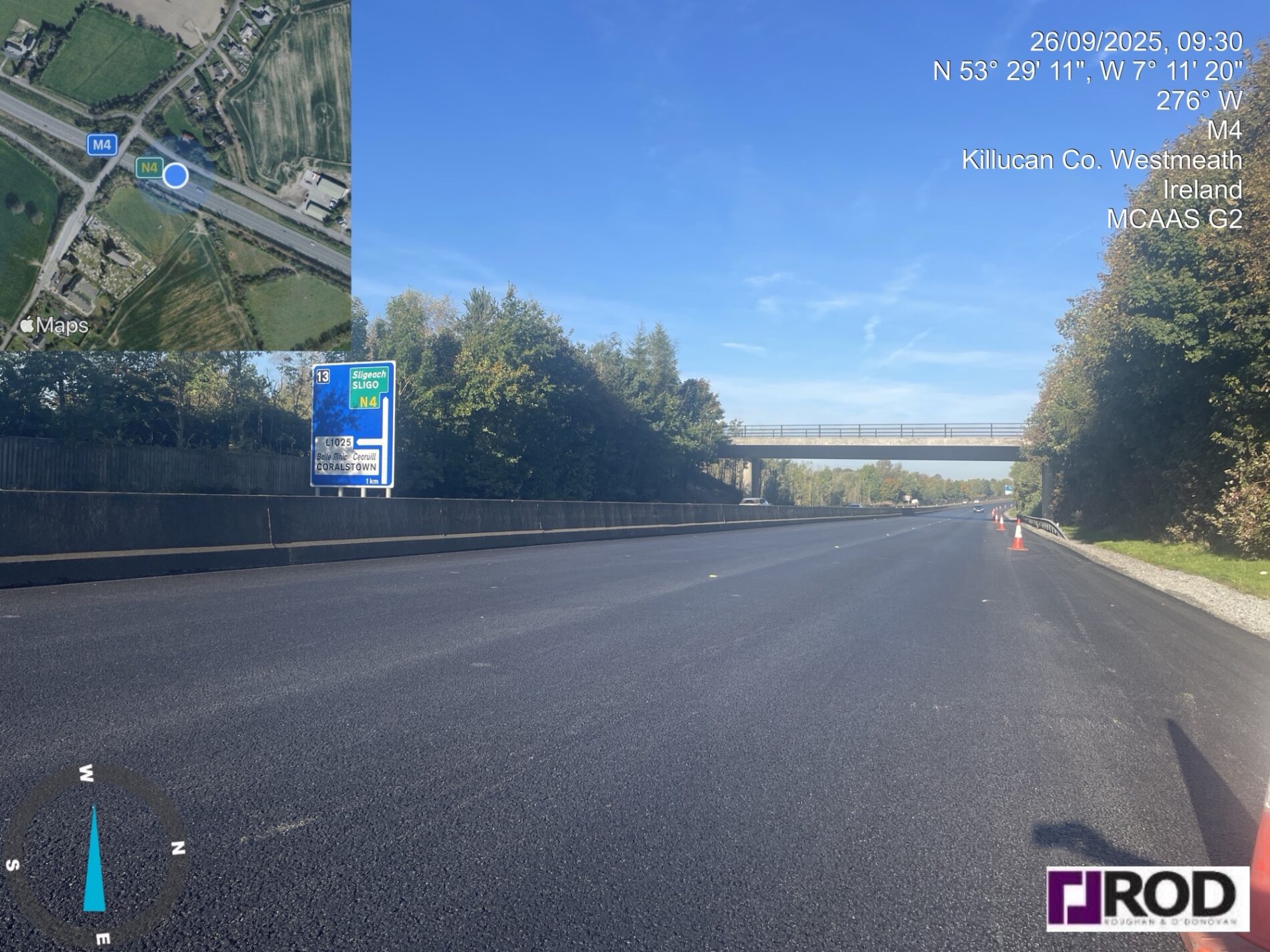
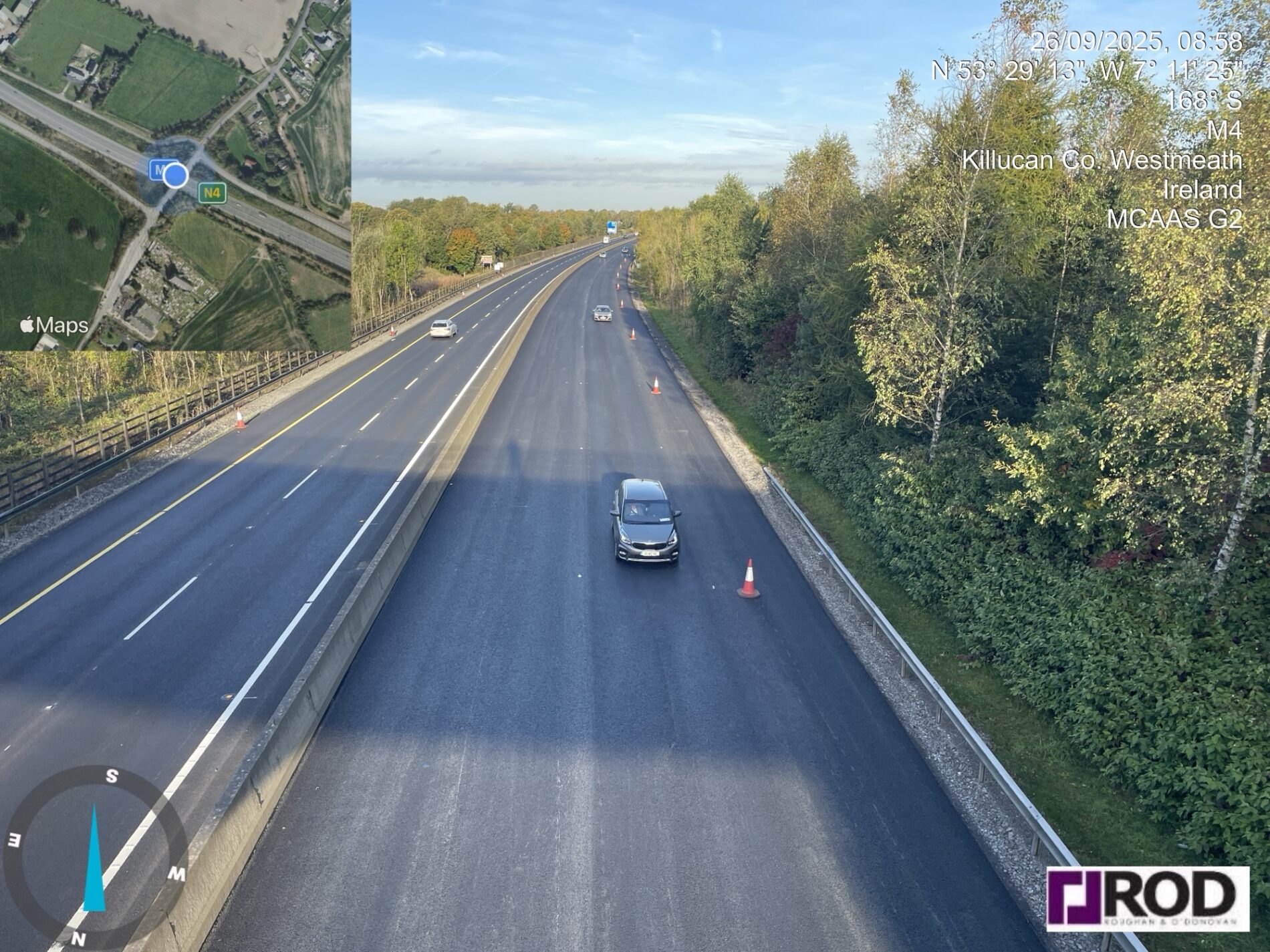
The M4/N4 scheme involved the replacement of 9.4 km of pavement surface and was delivered as a call‑off under TII’s existing High-Speed Framework using the CO₂ Performance Ladder. For this project. Jons Civil Engineering led the way with sustainability solutions focused on delivering real results and was the first company to achieve Company Level 4 on the Carbon Ladder in Ireland & the UK as part of this project.
Implementation Approach
Collaborative Planning
Jons Civil Engineering partnered with their subcontractor Breedon Group to develop a detailed, low‑carbon project plan. Additionally, following detailed consultation and subsequent agreement of TII, this plan also included the undertaking of a 510‑metre “Trial Section” incorporating 15% Reclaimed Asphalt Pavement (RAP) into the Stone Mastic Asphalt (SMA) surface course.
- 501.1 tonnes of asphalt were laid at 45 mm thickness.
- The RAP integration reduces the demand of virgin aggregates, thus promoting circularity and carbon reduction.

Switch to Warm Mix Asphalt
In addition to RAP usage, the contractor transitioned from traditional hot mix to warm mix asphalt, resulting in further energy and emissions savings during production.
CO₂ Performance Ladder Measures Implemented
To meet the Ladder requirements, the project team advanced a range of measures, including:
- systematic carbon reporting
- energy‑efficient production methods
- innovation in material reuse
- emissions monitoring and behavioural optimisation
- structured client‑contractor dialogue on continuous improvement
These measures collectively supported the Level 4 certification under the Ladder.
Results
Project Delivery
The project was successfully completed on 25 September 2025. The environmental performance of the adopted materials and methods will now be monitored and assessed in collaboration with TII to evaluate and verify their long-term benefits.
Carbon Reduction Outcomes
The trial section incorporating SMA 14 warm mix with 15% RAP delivered measurable reductions in embodied carbon emissions:
- Relative to the standard SMA 14 warm mix (control mix): A saving of more than 9 kg Co₂e per tonne, representing an approximate 11% reduction in emissions per tonne of asphalt produced.
For the 501.1 tonnes of asphalt laid in the trial section, the total carbon reduction achieved was approximately 4.7 tonnes Co2e.
These findings confirm that combining warm mix technology with RAP can deliver substantial embodied carbon savings without compromising durability or performance.
Conclusion
The M4/N4 Pavement Renewal Scheme illustrates the powerful role of the CO₂ Performance Ladder in enabling low‑carbon innovation, enhancing collaboration, and embedding climate‑focused decision‑making in infrastructure delivery.
By scaling the Ladder across all High-Speed Pavement Rehabilitation projects, TII is accelerating sectoral progress toward national decarbonisation goals while fostering a culture of continuous improvement and sustainable construction practices.