


The CO2 Performance Ladder
Carbon Emission Management System & Green Public Procurement Tool
Public procurement represents a significant share of Ireland’s economy, accounting for approximately 10-12% of Gross Domestic Product (GDP).[1] This scale of spending gives public authorities powerful leverage to influence markets and drive more sustainable practices.[2] Green Public Procurement (GPP)[3] is a key mechanism to harness this influence, supporting the transition to low-carbon solutions,[4] particularly within the construction sector and the build environment, which are responsible for around 37% of the country’s greenhouse gas emissions.[5]
Despite its potential, the adoption of GPP in construction has been slow. This presents a challenge for Ireland in meeting its ambitious climate targets,[6] including a 51% reduction in emissions by 2030 and achieving climate neutrality by 2050. Accelerating the uptake of practical tools and frameworks is essential to closing this gap.
The CO2 Performance Ladder is a GPP tool and certification system that help organisations reduce carbon emissions while gaining competitive advantages in procurement. Evidence[7] [8] shows that organisations certified on the Ladder reduce emissions at twice the rate of the industry average. By enabling contracting authorities to incorporate clear carbon reduction criteria into tenders, the Ladder supports suppliers in systematically reducing emissions across projects. It also provides a transparent framework for measuring and reporting progress, helping to demonstrate real, quantifiable impact.
By scaling up the use of the CO2 Performance Ladder across public procurement, Ireland can unlock the full potential of its spending power, accelerating decarbonisation in the construction sector and making meaningful progress towards national climate goals.
A Dual Function – For Companies and Procurers
The CO2 Performance Ladder serves a dual function as both a green public procurement tool for contracting authorities and a CO2 & energy management system for all types of organisations seeking certification.
Organisations of all sizes and sectors can choose to obtain a certificate on the CO2 Performance Ladder.
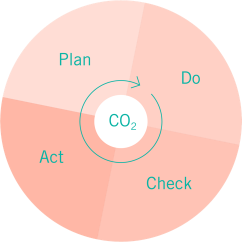
The Ladder is a structured management system that helps organisations measure, manage, and reduce their carbon emissions and energy use in a systematic way. At its core, the Ladder is built on the Plan-Do-Check-Act cycle of continuous improvement, a proven model for effective management systems. This approach ensures that organisations do not just set targets but continuously improve their carbon and energy performance year after year.
Three Steps on the Ladder
The Ladder is structured across three certifiable steps, allowing organisations to progress at a manageable pace while increasing their impact.
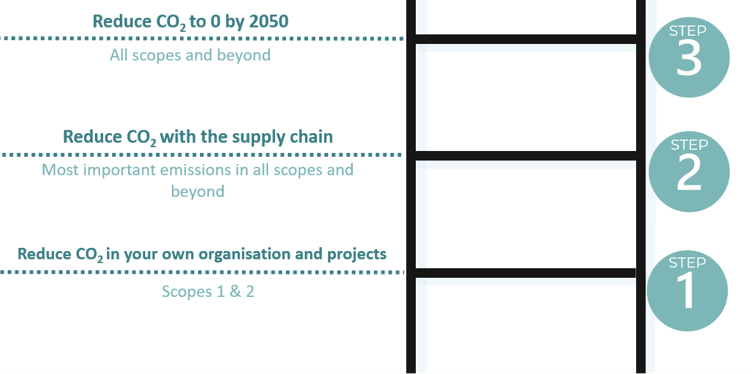
The steps represent more maturity and increasing ambition, with Step 3 being the most challenging, requiring long-term, deep reductions across all scopes.
- Step 1 – Operational Emissions (Scopes 1 & 2): Focuses on mapping the carbon footprint, establishing a baseline, and initiating energy and carbon reduction within the organization’s own operations (e.g., fuel combustion, electricity).
- Step 2 – Supply Chain Engagement (Scope 3): Expands the ambition to include supply chain and other influenceable emissions, requiring analysis and reporting on emissions from purchased goods, services, and logistics. A Climate Transition Plan is also required.
- Step 3 – Reduce to Zero by 2050 (Scopes 1, 2 & 3): Requires an expanded Climate Transition Plan (CTP) with quantified, long-term targets aligned with the 2050 zero-carbon ambition.
Within each step, certification is structured around four thematic areas, or angles:
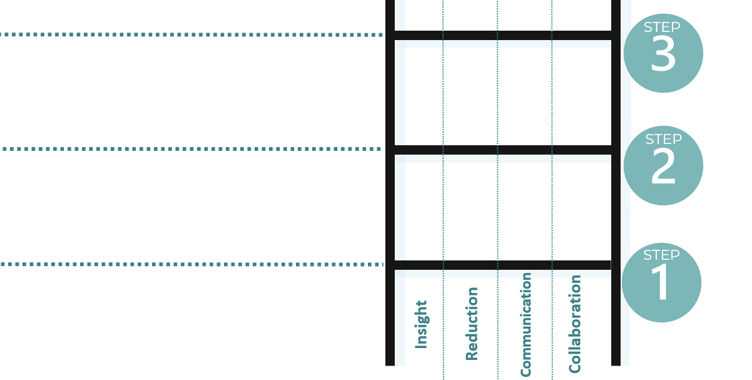
- Insight: Determining the energy streams, carbon footprint, and CO2 emissions within the organisation.
- Reduction:Developing ambitious goals and implementing concrete measures for reducing CO2 emissions, often divided into Scope 1, 2, and 3 targets.
- Communication: Structurally communicating company policies, goals, and results regarding CO2 reduction internally and externally.
- Collaboration:Actively participating in sector initiatives and collaborating with partners to innovate and reduce carbon emissions in the business chain.
How is the Ladder Assessed?
An organisation’s compliance to their stated ambition level is verified through independent audits conducted by accredited third-party certification bodies (CBs). Certificates are valid for three years and subject to annual audits. After three years, the organisation must be recertified. This ensures that certification reflects real performance and continuous improvement, rather than one-off (self) reporting. A list of third-party certifiers accredited or qualified for the CO2 Performance Ladder is provided on the Ladder’s website.
Costs
There are three types of fees for any organization or supplier pursuing CO2 Performance Ladder certification:
- The Audit fees, including an initial audit fees and annual audit fees.
- An annual contribution fee to the Foundation for Climate Friendly Procurement and Business (SKAO), the manager of the Ladder, based on the company’s annual turnover
| Company size | Company turnover €M per year | Annual contribution fees € |
| Sole proprietorship | 65 | |
| Small | < 5 | 190 |
| Small – medium | 5 – 15 | 380 |
| Medium | 15 – 35 | 450 |
| Medium – large | 35 – 100 | 799 |
| Large | 100 – 200 | 1,180 |
| Very large | 200 – 500 | 1,880 |
| Largest | > 500 | 6,000 |
Documents
Normative documents relating to the CO2 Performance Ladder can be found here, free of charge on the Ladder website.
The CO2 Performance Ladder is a practical Green Public Procurement (GPP) tool that helps contracting authorities drive carbon reduction through procurement. It acts as an award criterion by giving an advantage at the tender stage to suppliers that actively measure and reduce their emissions.
Contracting authorities can choose to integrate the Ladder into tenders. Suppliers can then submit their bids with a declared ambition level on the Ladder, and if successful, they are required to implement the project in accordance with that level. Independent auditors verify compliance and issue certification, which the public procurer then reviews as proof that the supplier has met the agreed emissions reduction commitments within the project.
How can Procurers use the Ladder?
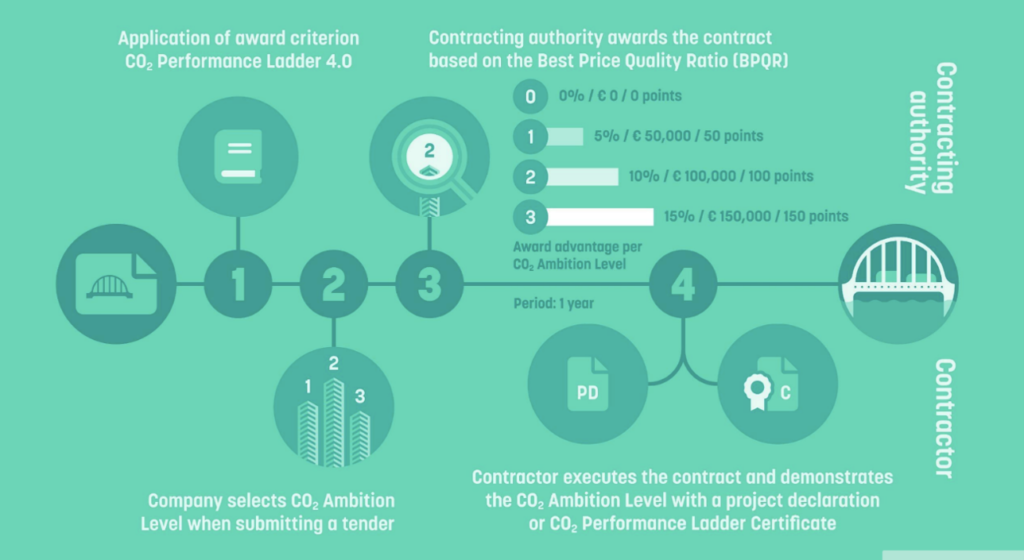
- The procurer includes the CO2 Performance Ladder award criterion in the tender – they (the procurer) determine the level and form of the award advantage available for each ambition level.
- Bidders submit their bid and, if they choose to target a level on the Ladder, include their intended ambition level for project implementation.
- The procurer awards the contract based on Best Price Quality Ratio (BPQR) and records the intended ambition level contractually as a performance requirement.
- The contractor executes the contract and demonstrates compliance throughout the contract with the intended ambition level. Proof of compliance can be either organisation-level or project-specific, and this proof is required within a pre-determined period of the contract award, determined by the procurer.
Forms of Award Advantage
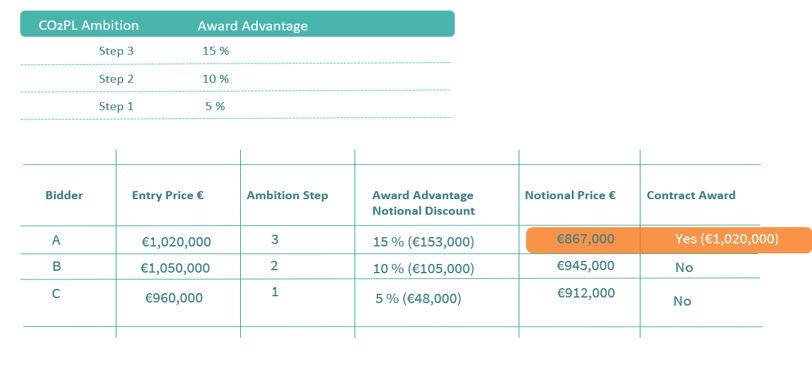
Contracting authorities can choose from several methods to reward higher ambition levels on the Ladder. They can offer (1) additional quality points within the evaluation scoring, (2) a fictitious discount applied during bid comparison, or (3) fixed price advantage linked to Ladder Steps. This flexibility allows procurers to tailor the system to different contract types and market conditions.
The figure below shows an example of how an award advantage could be applied in a tender evaluation. In this case, a fictitious discount advantage is applied. Following the evaluation of the tender, Company A is ranked as the second lowest bidder and is committed to ambition Step 3 on the CO₂ Performance Ladder. After applying the 15% fictitious discount, Company A ranks first and will be awarded the contract. This reduction is merely for evaluation purposes, and the contract award will be the full entry price of Company A’s bid.
Key Considerations for Procurers
- The Ladder is free for contracting authorities to use in tenders.
- It is important to note that the Ladder is used as an award criterion, not a selection criterion. This means that procurers cannot require certification on the Ladder for a contractor to participate in a bid – use of the Ladder is voluntary. Moreover, once a contract is won using the Ladder, compliance with the stated ambition level is a contractual requirement for the organisation. Failure to meet this requirement results in a penalty which is determined by the procurer.
- Detailed guidance and templates are available in the Procurement Guide.
- Frequently asked questions (and answers) regarding legal considerations when using the Ladder in procurement can be found here.
Irish Implementation
The Ladder’s effectiveness has been demonstrated in Ireland by Transport Infrastructure Ireland (TII) as the first public procurer to integrate the system into tenders. The M4/N4 Pavement Renewal Scheme and M7 Kildare Bypass project were the earliest successes in Ireland, with the M7 project achieving a 21% reduction in carbon emissions.
Get Inspired!
Irish Case Studies
-
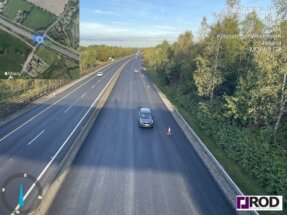
Advancing Low‑Carbon Procurement with the CO₂ Performance Ladder on the M4/N4 Pavement Renewal Scheme
Following the successful pilot of the CO₂ Performance Ladder on the M7 Kildare Bypass project, Transport Infrastructure Ireland (TII) has expanded the use of the Ladder as a core low‑carbon procurement tool. -
Advancing Low‑Carbon Procurement with the CO₂ Performance Ladder on the M4/N4 Pavement Renewal Scheme
Following the successful pilot of the CO₂ Performance Ladder on the M7 Kildare Bypass project, Transport Infrastructure Ireland (TII) has expanded the use of the Ladder as a core low‑carbon procurement tool.
Ladder Background
The CO2 Performance Ladder was first introduced in 2009 in the Netherlands, developed by the Dutch rail infrastructure manager ProRail as part of its procurement strategy. At the time, there was growing recognition that traditional procurement was not delivering the innovation or emissions reductions needed to address climate change. The Ladder was designed to change this by rewarding companies that actively measure and reduce their carbon emissions during the tendering process.
The Ladder is managed by the Foundation for Climate Friendly Procurement and Business (SKAO). More than 8,000 organisations have Ladder certificates, and more than 300 contracting authorities use the Ladder in tenders. The Ladder is now implemented in several European countries beyond the Netherlands, including the United Kingdom, Belgium, Germany, France, Portugal, and Ireland.
Research and Evidence
Improving energy and carbon management in construction and civil engineering companies – Evaluating the impacts of the CO2 Performance Ladder
Utrecht University, 2026, The Innovation Impact of CO2PL-Based Public Procurement
2025, Utrecht University Centre for Public Procurement (UUCePP). Impact of the CO₂ Performance Ladder 2025
Get in touch
The Team
-

Marianne Ibrahim
Marianne joined IGBC in 2024 leading the CO2 Performance Ladder pilot in Ireland. A civil engineer by background, Marianne is a certified Project Management Professional (PMP)® and Agile Certified Practitioner (PMI-ACP)®, with over 8 years’ experience as a project management instructor. She brings broad volunteering experience with NGOs focused on social empowerment and poverty alleviation. -

Sally Carpenter
Sally joined IGBC in October 2025 contributing to certification projects including the Home Performance Index and the CO2 Performance Ladder. She holds an MSc in Smart and Sustainable Cities from Trinity College Dublin, where her dissertation explored housing and communal space in Dublin’s Liberties, and a BA in Psychology from Boston College with a minor in Environmental Studies.
References
[2] Keaveney & Butler 2014
[3] Green Public Procurement Strategy & Action Plan 2024- 2027
[4] DECC 2024
[5] O’Hegarty, Wall & Kinnane, 2022
[7] Rietbergen, Martijn G. & Opstelten, Ivo, J. & Blok, K. (2016). Improving energy and carbon management in construction and civil engineering companies through green procurement. https://media.co2-prestatieladder.nl/media/2021/Documenten%202021/Improving%20energy%20and%20carbon%20management%20in%20construction%20and%20civil%20engineering%20companies.pdf
[8] CE Delft (2023). Evaluation of the CO2 Performance Ladder. Results from a survey, case studies and a workshop.
Tool
